Book Categories:


Wait, don't go!
Become a Member Today and Unlock Access to All eBooks!
Thousands of eBooks at your fingertips. Read, learn, and grow anytime, anywhere.
Original price was: $169.99.$5.00Current price is: $5.00.
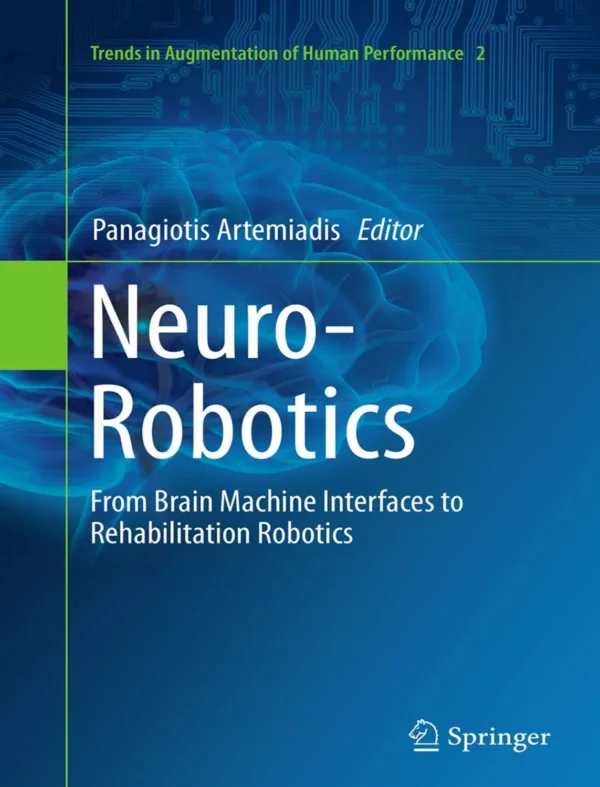
Neuro-robotics stands at the forefront of modern scientific innovation, combining insights from neuroscience, robotics, engineering, and computer science to create intelligent systems capable of understanding, assisting, and enhancing human capabilities. This interdisciplinary field not only advances our knowledge of the human brain but also drives the development of sophisticated robotic technologies that seamlessly interact with people.
This comprehensive volume explores the powerful synergy between neuroscience and robotics, highlighting groundbreaking research, emerging technologies, and real-world applications that are transforming healthcare, rehabilitation, and human augmentation.
The book begins with an introduction to the fundamental concepts of neuro-robotics, examining how biological principles inspire the design of advanced robotic systems. Readers are introduced to state-of-the-art bio-inspired devices and technologies that emulate human sensory, cognitive, and motor functions, demonstrating how nature continues to influence next-generation robotics.
The second section focuses on the rapidly evolving field of human–machine interaction and performance augmentation. It explores innovative interface technologies that enable direct communication between humans and robotic systems, creating new possibilities for:
Through practical examples and recent advances, readers gain insight into how neural signals can be translated into meaningful robotic actions and how humans and machines can collaborate more effectively.
The final section examines the reverse perspective: using robotic systems as tools to better understand human motor behavior and neurological function. By physically interacting with the human body, robotic devices provide valuable opportunities to:
Special attention is given to robotic rehabilitation technologies, therapeutic exoskeletons, and assistive devices that support recovery, improve mobility, and enhance quality of life for patients with neurological impairments.
This book is an essential resource for:
By bringing together advances from multiple disciplines, this book provides a comprehensive overview of how neuro-robotics is reshaping our understanding of the brain while enabling the development of intelligent robotic systems that enhance human abilities, restore lost functions, and create new possibilities for human–machine collaboration.




Reviews
There are no reviews yet.