Book Categories:

Wait, don't go!
Become a Member Today and Unlock Access to All eBooks!
Thousands of eBooks at your fingertips. Read, learn, and grow anytime, anywhere.
Original price was: $90.00.$5.00Current price is: $5.00.
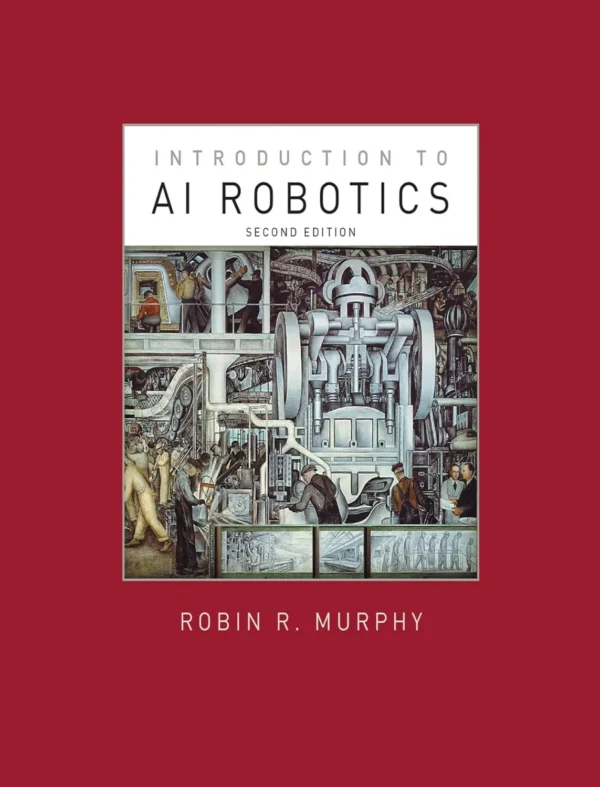
Artificial Intelligence for Robotics
This textbook presents a comprehensive overview of artificial intelligence (AI) algorithms and software architectures for robotic systems, integrating rigorous theoretical foundations with practical engineering applications. It is designed to equip readers with the knowledge required to design, implement, and evaluate intelligent robotic systems capable of perception, decision-making, planning, learning, and autonomous operation.
The book assumes no prior background in artificial intelligence, making it accessible to students and practitioners from diverse engineering and computer science disciplines. Fundamental concepts from the major branches of AI are introduced progressively, with each topic explained in the context of its contribution to robotic autonomy. This integrated approach enables readers to understand how individual AI techniques work together to create intelligent robotic behavior.
The second edition represents a substantial revision and expansion of the original work, reflecting the significant advances achieved in artificial intelligence and robotics over the past decade and a half. It begins by establishing a conceptual framework for AI-driven robotics, emphasizing the distinction between traditional automation—where systems execute predefined tasks—and autonomous systems that are capable of independent reasoning, adaptation, and decision-making.
Subsequent chapters examine the core functionalities of intelligent robots, including sensing, perception, and actuation as reactive processes, followed by higher-level deliberative capabilities such as planning, reasoning, and autonomous decision-making. The book also explores cooperative multi-robot systems, human–robot interaction, and the design principles required to develop reliable and effective autonomous systems.
A distinguishing feature of this edition is its expanded coverage of emerging topics in modern robotics, including robot locomotion, simultaneous localization and mapping (SLAM), machine learning, human–robot interaction, and the ethical considerations associated with the development and deployment of autonomous systems. These topics reflect current research trends and the growing role of AI in intelligent robotic applications.
To reinforce theoretical concepts, each chapter includes exercises that encourage analytical thinking and practical problem-solving. Many chapters also present case studies illustrating the application of AI techniques to real-world robotic systems. In addition, endnotes provide recommendations for further reading, discuss advanced research topics, and include supplementary insights that enrich the learning experience.
By combining comprehensive theoretical coverage with practical implementation strategies, the book serves as an essential reference for undergraduate and graduate students, researchers, and engineers seeking to develop intelligent autonomous robotic systems capable of operating effectively in complex and dynamic environments.

Reviews
There are no reviews yet.