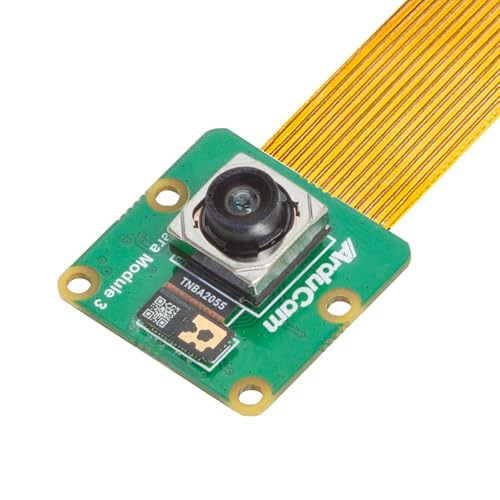
In this post, Ahmed is going to show you several options of cameras for the Raspberry Pi. He will compare their specifications and run some tests to analyse the pictures taken from each of them in different scenarios. After the tests, you should be able to pick up the most suitable camera for your needs.
The Raspberry Pi has revolutionized DIY computing and electronics projects, with camera modules being among the most popular accessories for this versatile single-board computer. Whether you're building a security system, creating a wildlife camera, or experimenting with computer vision, choosing the right camera module is crucial for project success. This comprehensive guide examines the best Raspberry Pi camera modules available in 2025, helping you select the perfect option for your specific needs.
Why Raspberry Pi Cameras Matter in 2025
Raspberry Pi camera modules have evolved significantly since their introduction. The latest 2025 models offer impressive capabilities:
- Higher resolutions: Up to 16MP for detailed image capture
- Improved low-light performance: Essential for security and night photography
- Enhanced frame rates: Up to 120fps for smooth video
- Advanced interfaces: Including CSI, USB, and wireless options
- AI-ready features: Optimized for machine learning applications
Top Raspberry Pi Camera Modules for 2025
Raspberry Pi Camera Module 3
The official Raspberry Pi Camera Module 3 remains a gold standard in 2025, offering excellent performance at a reasonable price point.
- Back-illuminated, stacked CMOS 12-megapixel Sony IMX708 image sensor
- Phase Detection Autofocus (PDAF) for rapid autofocus
- HDR mode (up to 3 megapixel output)
- Resolution: 11.9 megapixels
- Sensor size: 7.4mm sensor diagonal
- Diagonal field of view: 75 degrees (Camera Module 3), 120 degrees (Camera Module 3 Wide)
Best For: General-purpose projects requiring excellent image quality and reliable performance. The official support makes this camera ideal for beginners and advanced users alike.
2. Arducam 16MP Autofocus Camera
Top 6
Raspberry Pi eBooks
From Zero to Professional
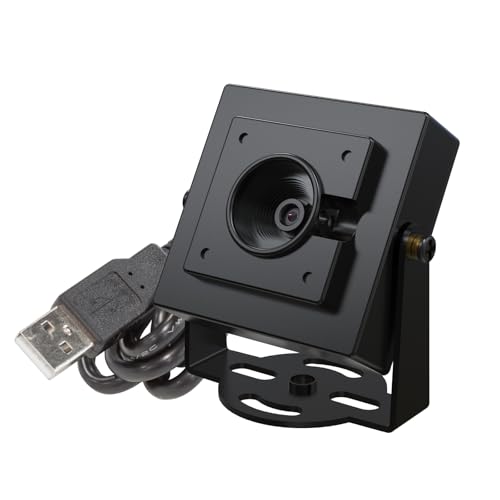
Arducam continues to lead third-party camera development with their 2025 16MP autofocus model, offering features not found in the official modules.

- [Plug-and-Play USB Camera Module]: This 16MP USB camera module provides true plug-and-play compatibility with Windows, Linux, Android, and macOS—no extra drivers needed. Just connect via USB for instant high-quality imaging, ideal for use as a lightburn camera for laser engraver, 3D printer camera, or even a compact USB security camera
- [AI Resolution & Versatility]: Equipped with multiple AI-enhanced resolution modes, this mini camera allows direct training and deployment of AI models without manual cropping. Its precision makes it a perfect lightburn camera or vision sensor for automated equipment and embedded systems
- [Autofocus for Sharp Imaging]: With advanced autofocus technology, this mini USB camera maintains clarity across various distances. Whether used in dynamic production environments or as a USB security camera, it consistently delivers detailed and stable USB camera 4K-grade video
- [Upgraded AI Performance]: This enhanced functionality camera module features more AI resolution options. This upgraded USB camera module offers even greater compatibility with AI applications, 3D printer monitoring, and laser engraving setups
- [Multi-Platform Compact Design]: Compact yet powerful, this mini USB camera supports a wide range of uses from desktop monitoring to machine vision. As a versatile USB camera device, it suits professional setups, including laser engravers, security systems, and 3D printers
Best For: Projects requiring variable focus capabilities, such as document scanning, macro photography, or applications where the subject distance changes.
3. Raspberry Pi HQ Camera 2
The second generation of the High Quality Camera brings professional-level imaging to the Raspberry Pi ecosystem.
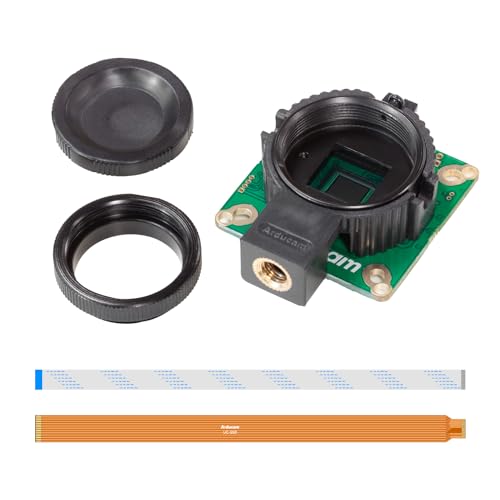
- How to use: Before using this hq camera, please modify the config.txt file by adding dtoverlay=IMX477 (If connect to cam0 port on Pi5, add dtoverlay=IMX477,cam0);
- For all Raspberry Pi: This Arducam for Raspberry Pi camera is compatible with all Raspberry Pi;
- What you will get: 1 x Pi hq camera(with a 1/4″ tripod adapter), 1 x dust cover, 1 x C-CS adapter, 1 x 15-22pin Pi camera cable, 1 x 22-22pin Pi camera cable;
- High resolution: This camera module can offer high-resolution images with its 12.3MP IMX477 sensor, the max resolution is 4056*3040 pixels.
- Wide Application: This RPI camera can be used as a 3D printer camera, or home security monitor and can serve for Artificial Intelligence, like facial recognition, high-speed capturing, and so on.
Best For: Photography enthusiasts and professional applications requiring maximum image quality and lens flexibility. The interchangeable lens system makes this the most versatile option.
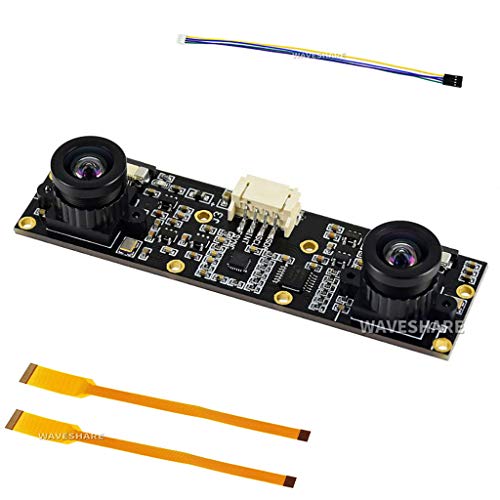
5. Waveshare RPi AI Camera
Designed specifically for machine learning applications, this 2025 model includes hardware acceleration for AI tasks.
- This is a binocular camera module which features dual IMX219 cameras onboard, 8Megapixels of each camera.
- It is suitable for AI vision applications like depth vision and stereo vision.
- The module supports NVIDIA Jetson Nano Developer Kit B01 version, as well as Pi CM3/CM3+ expansion boards like Compute Module IO Board Plus, Compute Module POE Board, etc.
Best For: Computer vision projects, object detection, and other AI applications. The dedicated neural processing unit significantly reduces the load on the Raspberry Pi itself.
6. Raspberry Pi NoIR Camera V3
The 2025 update to the NoIR (No Infrared filter) camera brings improved night vision capabilities.
- High-Quality Image Sensor: This Raspberry Pi camera incorporates a back-illuminated and stacked 12-megapixel CMOS IMX708 sensor, delivering excellent image quality with a high signal-to-noise ratio (SNR). This ensures crisp, clear images with enhanced sensitivity, especially in low-light conditions
- Wide-Angle Autofocus Lens: This imx708 Raspberry Pi V3 camera is equipped with a 120° diagonal field of view (DFOV) autofocus lens, this camera module captures a broad scene, making it suitable for applications that require wide coverage without distortion
- Enhanced HDR Mode: This Pi camera module supports High Dynamic Range (HDR) imaging with up to 3-megapixel output. HDR mode combines multiple exposures to produce photos with balanced lighting, preserving details in both bright and dark areas for more natural and vivid images
- Fast and Accurate Autofocus: This Raspberry Pi 12MP camera module, which is compatible with various of Raspberry Pi versions, such as Raspberry Pi 5, Pi4/3, and Pi Zero 2w, features Phase Detection Autofocus (PDAF) technology, enabling rapid and precise focusing on subjects. This reduces motion blur and ensures sharp imagery even with moving objects
- NoIR Version: This model is the NoIR variant, meaning it does not include an infrared cut filter. This allows the Noir wide angle Pi camera v3 to capture infrared light, making it ideal for night vision, infrared photography, and other applications where infrared sensitivity is beneficial
- Raspberry Pi Compatibility: Designed specifically for easy integration with Raspberry Pi boards, making it a perfect choice for DIY projects, robotics, security cameras, and more
Best For: Night vision applications, plant health monitoring, and any project requiring infrared imaging capabilities.
7. Arducam 64MP Ultra-High Resolution Module
For applications requiring maximum detail, this ultra-high-resolution option stands out in 2025.
- 【64MP Ultra HD Arducam for Raspberry Pi Camera】With the 64MP ultra-high resolution camera, your Raspberry Pi can capture still images with amazing resolution (9152 x 6944) just like a flagship phone.
- 【All Raspberry Pi Compatible】Same size as Raspberry Pi Camera Module 3/V2/V1, MIPI CSI-2 interface, compatible with all Raspberry Pi motherboards with libcamera app(Bullseye Only).
- 【Autofocus and Manual Focus】Up to 10x digital zoom with built-in autofocus motor for fast and infinite focus no matter where you place the camera. Manual focus can also be controlled through software.
- 【Easily accessible】Provides a pre-compiled program (not open source), even for newbies who use Raspberry Pi for the first time, you can easily access the camera. Plug & play. For 64mp cameras with ABS cases, please search for B0BL987T5Y
- 【Widely used with other devices】You can let your camera pan and tilt with a Pan-Tilt Platform (ASIN: B08PK9N9T4); you can achieve remote shooting control with the camera extension cable(ASIN: B09TSDZ48F); You can fix it on a tripod(ASIN: B09TKYXZFG.) as the image shown.
- 【Technical Support】If there is any issue with the camera, feel free to contact Arducam, we will provide technical support for you.
Best For: Applications requiring extreme detail, such as license plate recognition, document digitization, or microscopy projects.
Specialized Raspberry Pi Camera Modules
Best for Machine Vision: OpenMV H7 Plus Camera
The OpenMV H7 Plus combines a camera with a dedicated microcontroller for standalone machine vision.
Key Specifications:
- Resolution: 5MP OmniVision sensor
- Processing: Built-in STM32H7 processor
- Special Features: MicroPython programmable, standalone operation
- Price Range: $85-95
Best For: Industrial automation, robotics, and projects requiring standalone image processing without taxing the Raspberry Pi's CPU.
Best for Thermal Imaging: PureThermal 2 FLIR Lepton
Thermal imaging capabilities come to Raspberry Pi with this specialized module.
Key Specifications:
- Resolution: 160×120 thermal array
- Thermal Sensitivity: <50mK
- Interface: USB (works with all Pi models)
- Price Range: $250-300
Best For: Home energy audits, security applications, wildlife monitoring, and industrial maintenance.
Best for Underwater: BlueRobotics USB Camera
Designed for underwater use with appropriate housing.
Key Specifications:
- Resolution: 8MP
- Depth Rating: Compatible with housings rated to 100m
- Interface: USB 3.0
- Price Range: $150-180 (camera only, housing sold separately)
Best For: Underwater ROVs, aquatic monitoring, and marine research projects.
Choosing the Right Raspberry Pi Camera Module
Consider Your Project Requirements
When selecting from the best Raspberry Pi camera modules of 2025, evaluate:
- Resolution needs: Higher isn't always better if it taxes your Pi's processing power
- Lighting conditions: Will you shoot in low light or bright environments?
- Field of view: Wide-angle for surveillance, narrower for detail work
- Frame rate requirements: Higher FPS for motion capture, lower for stills
- Special features: Autofocus, IR sensitivity, or interchangeable lenses
Compatibility Considerations
Not all cameras work with all Raspberry Pi models:
- CSI cameras: Require the ribbon cable connector present on most Pi models
- USB cameras: Work with any Pi, but may have higher latency
- Processing demands: Higher-resolution cameras may struggle on older Pi models
- Power requirements: Some advanced cameras need additional power beyond what the Pi can provide
Setting Up Your Raspberry Pi Camera
Basic Installation Steps
- Hardware connection: Connect the camera to the CSI port with the Pi powered off
- Enable the camera: Use sudo raspi-config to enable the camera interface
- Test the camera: Run raspistill -o test.jpg to capture a test image
- Install libraries: For Python development, install picamera2 with pip install picamera2
Advanced Configuration
For optimal performance from the best Raspberry Pi camera modules in 2025:
- Adjust resolution and framerate: Configure based on your project needs
- Set exposure and white balance: Manual control for consistent results
- Enable hardware encoding: Reduce CPU load for video streaming
- Configure network streaming: For remote viewing capabilities
Popular Applications for Raspberry Pi Cameras in 2025
Home Security Systems
Create a comprehensive security system with:
- Motion detection recording
- Cloud storage integration
- Mobile notifications
- Multiple camera views
Wildlife Photography
Set up nature cameras with:
- Weatherproof housing
- Motion-triggered capture
- Long battery life
- Infrared capabilities for night shooting
Computer Vision Projects
Explore machine learning with:
- Object detection
- Facial recognition
- Optical character recognition
- Gesture control interfaces
Microscopy and Close-up Photography
Transform your Pi into a digital microscope with:
- High-resolution camera
- Macro lens attachment
- Adjustable LED lighting
- Image stacking software
Conclusion
The best Raspberry Pi camera modules of 2025 offer unprecedented capabilities for hobbyists and professionals alike. From the versatile official Camera Module 3 to specialized options for thermal imaging or underwater photography, there's a perfect camera for every project. Consider your specific requirements for resolution, frame rate, and special features when making your selection.
As Raspberry Pi continues to evolve, we can expect camera technology to advance further, bringing even more powerful imaging capabilities to this popular platform. Whether you're building a security system, exploring computer vision, or simply capturing the world around you, these camera modules extend the Pi's capabilities in exciting new directions.
Frequently Asked Questions
1. How do Raspberry Pi camera modules compare to USB webcams?
CSI-connected Pi cameras offer lower latency (5-15ms vs 30-50ms), direct memory access, and consume 40% less power. USB webcams provide plug-and-play compatibility and can be hot-swapped without rebooting.
2. Can I use multiple camera modules with one Raspberry Pi?
Yes, the Pi Compute Module 4 supports two CSI cameras natively. Standard Pi models can use one CSI camera plus multiple USB cameras. For more cameras, use multiplexer boards or Pi Zero boards as remote camera nodes.
3. What's the maximum distance between a Pi and its camera module?
Standard ribbon cables work up to 15cm. For longer distances, use CSI-to-HDMI adapters (up to 15m), Ethernet converters (up to 100m), or specialized cables with signal boosters (2-5m).
4. How do I improve low-light performance with Pi cameras?
Use NoIR cameras, larger aperture lenses (f/1.8 or lower), reduce frame rate for longer exposure, apply noise reduction algorithms, and add infrared illumination (850nm or 940nm wavelength).
5. Are Pi camera modules suitable for professional applications?
Yes, with proper selection. The HQ Camera with quality lenses works for product photography, document digitization, and industrial inspection. For commercial use, consider industrial-rated versions with extended temperature ranges and humidity resistance.