

Wait! Don’t Go Yet! 👋
Become a Member Today and Unlock Access to All eBooks! 😍
Thousands of eBooks at your fingertips. Read, learn, and grow anytime, anywhere ✨
Become a Member Today and Unlock Access to All eBooks! 😍
Thousands of eBooks at your fingertips. Read, learn, and grow anytime, anywhere ✨

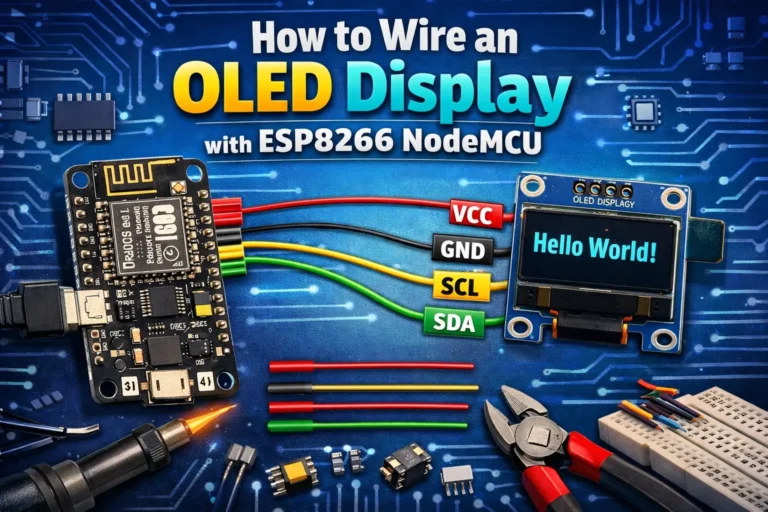
This guide shows how to wire an OLED display with ESP8266 NodeMCU. Using the Arduino IDE, we’ll show you how to write text, set multiple fonts, create shapes, and display bitmap pictures. Introducing 0.96 inch OLED Display The SSD1306 model,…
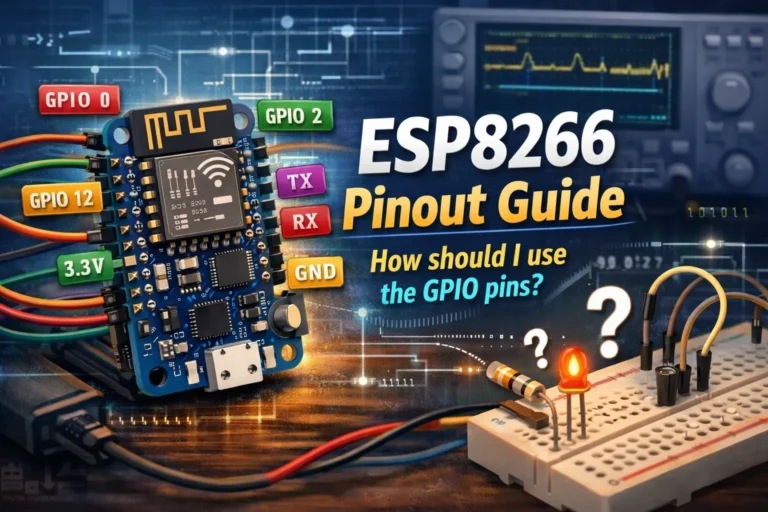
This article offers an ESP8266 pinout guide, including pinout diagrams, functions, and instructions on how to use them. With 17 GPIO pins, the ESP8266 12-E chip comes standard. Some GPIOs are not exposed for usage on all ESP8266 development boards,…
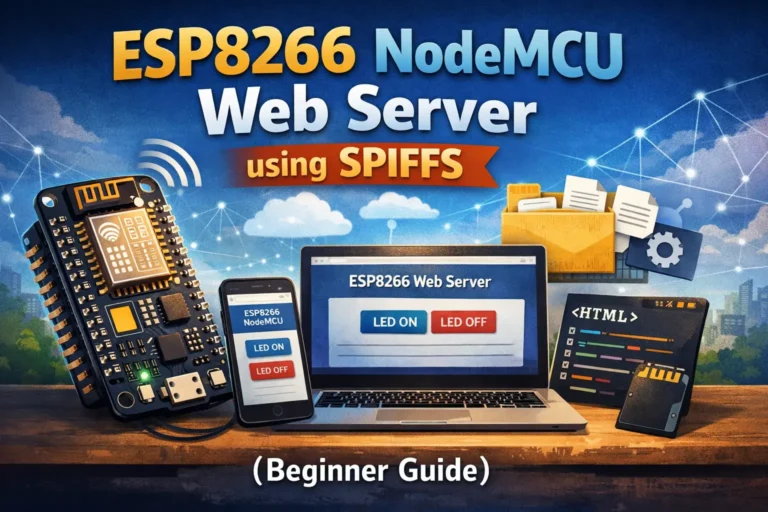
This tutorial shows how to create a web server that serves HTML and CSS files stored on the ESP8266 NodeMCU filesystem (SPIFFS) using the Arduino IDE. We’ll generate separate HTML and CSS files rather than having to write the HTML…
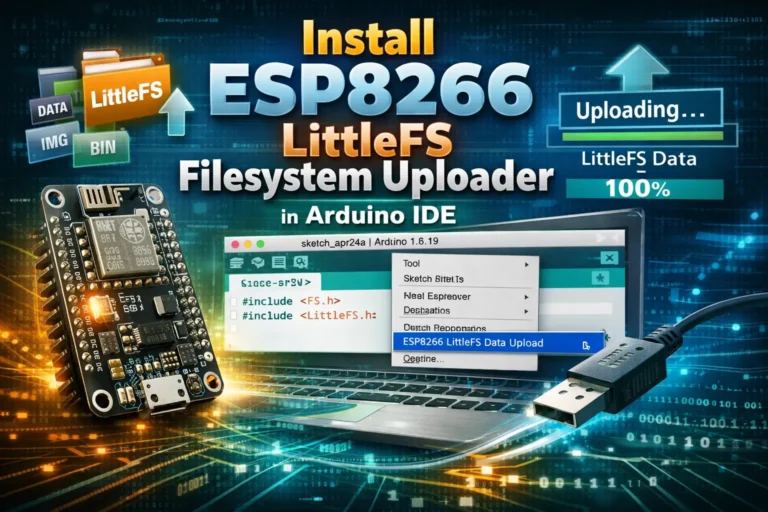
In this article, you’ll learn how to use the Arduino IDE to install the ESP8266 LittleFS Filesystem Uploader Plugin and upload files to the ESP8266 NodeMCU filesystem. Follow the next tutorial instead if you want to use LittleFS with VS…
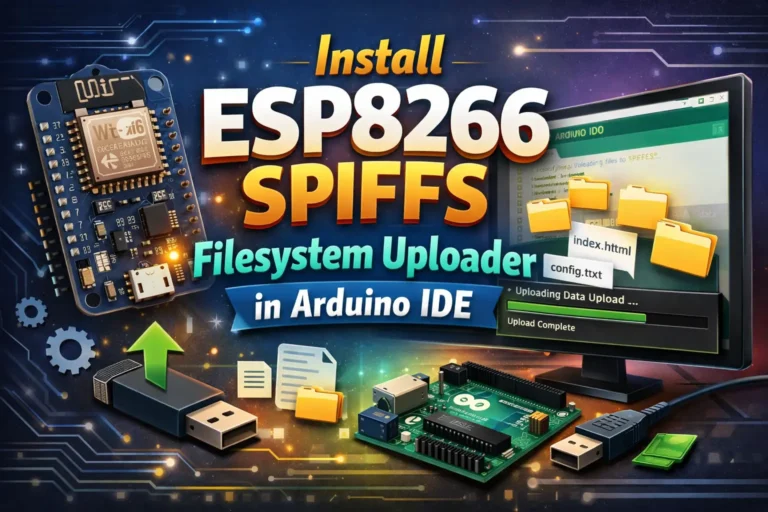
The Serial Peripheral Interface Flash File System (SPIFFS) is included in the ESP8266. SPIFFS is a small filesystem designed to create files for microcontrollers using flash memory. Using an Arduino IDE plugin, this article shows how to simply install ESP8266…

This article will teach you how to send an email from an ESP8266 NodeMCU board via a SMTP Server. We’ll show you how to send an email with plain text, HTML text, and attachments such as images and files (.txt).…
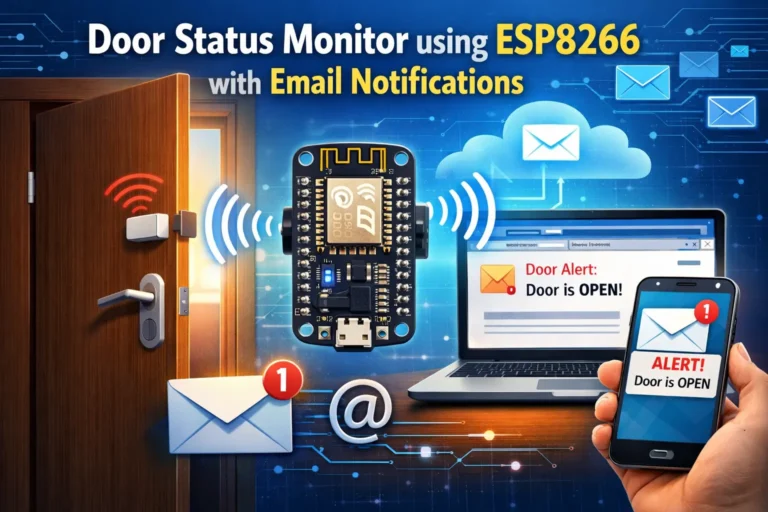
Using an ESP8266 NodeMCU board and a magnetic reed switch, you’ll door status monitor in this project. When the status of the door changes from open to closed, you’ll receive an email notification. IFTTT will be used to send email…
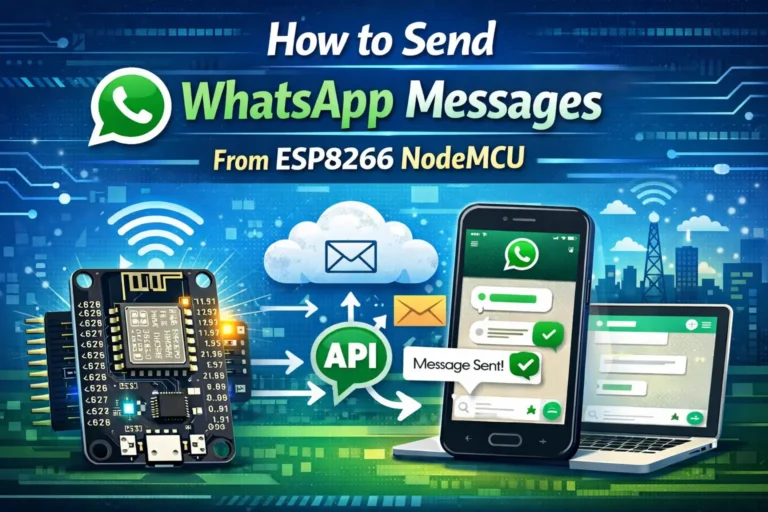
This tutorial will show you how to send WhatsApp messages from ESP8266 NodeMCU board. This may be useful to receive sensor reading alerts from the ESP8266, alert messages when a sensor reading is over or below a certain threshold, and…
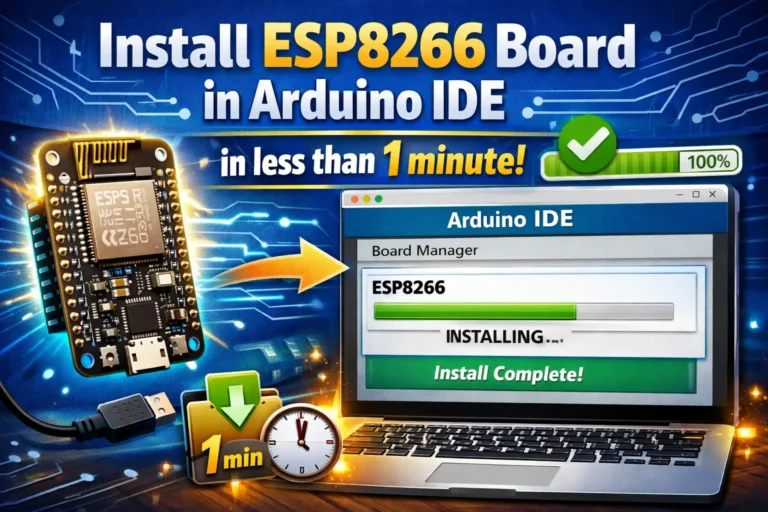
This is a quick guide to installing the ESP8266 board in Arduino IDE in less than 1 minute on a Windows PC, Mac OS X, or Linux computer. An add-on for the Arduino IDE created by the ESP8266 community allows…
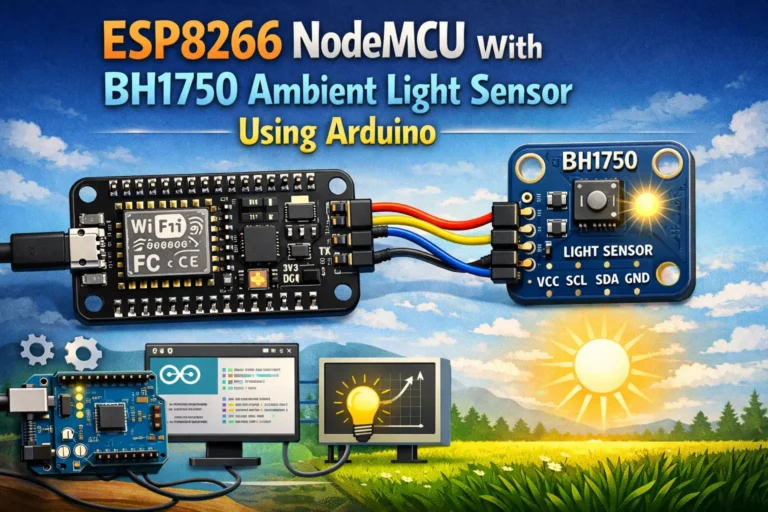
An ambient light sensor with 16 bits is called the BH1750. In this article, you will learn how to use the BH1750 ambient light sensor with the ESP8266 NodeMCU board using the Arduino IDE. The sensor communicates with a microcontroller…