Book Categories:


Wait, don't go!
Become a Member Today and Unlock Access to All eBooks!
Thousands of eBooks at your fingertips. Read, learn, and grow anytime, anywhere.
Original price was: $45.99.$5.00Current price is: $5.00.
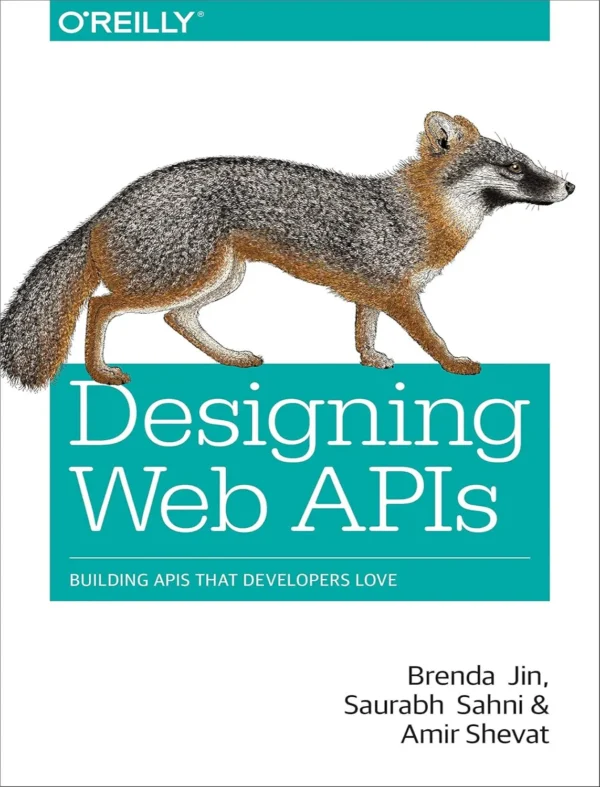
Web API Design
Developing a web API that provides reliable and efficient services to application developers is one of the most significant tasks in modern software engineering. While creating a functional API is technically demanding, establishing a widely adopted API with a sustainable developer ecosystem presents even greater architectural, operational, and strategic challenges. This book provides comprehensive guidance on designing, scaling, maintaining, and evolving interoperable web APIs that support long-term software growth and integration.
The authors present a structured methodology that combines the theoretical foundations of API design with practical implementation techniques. Readers are guided through the complete API lifecycle, from initial architectural planning and interface design to deployment, production management, and continuous improvement. The book also emphasizes the importance of developer experience by demonstrating how effective API design contributes to broader adoption and successful software ecosystems.
A distinguishing feature of the book is its practical orientation. It includes hands-on exercises, design templates, worksheets, checklists, and real-world case studies that illustrate best practices in API development. Examples drawn from leading technology companies—including Slack, Stripe, Facebook, Microsoft, Cloudinary, Oracle, and GitHub—demonstrate how large-scale organizations address common API design challenges and maintain high-quality developer platforms.
The book introduces the principal architectural paradigms used in modern API development, including traditional request–response communication models and event-driven architectures. It also discusses strategies for designing user-centered APIs that satisfy both functional and non-functional requirements while maintaining interoperability, scalability, and maintainability.
In addition, the text explains systematic approaches for managing API evolution as software products and business requirements change. It highlights techniques for scaling APIs to accommodate increasing traffic, expanding functionality, and supporting diverse application scenarios without compromising performance or compatibility. The book also emphasizes the importance of comprehensive developer support through high-quality documentation, implementation examples, software development kits (SDKs), and development tools that simplify API adoption and integration.
By integrating architectural principles, software engineering best practices, and real-world industrial experience, this book serves as an essential reference for software developers, system architects, technical leaders, and researchers involved in the design and management of modern web APIs.
Key Topics Covered





Reviews
There are no reviews yet.